Why we built Bonnie
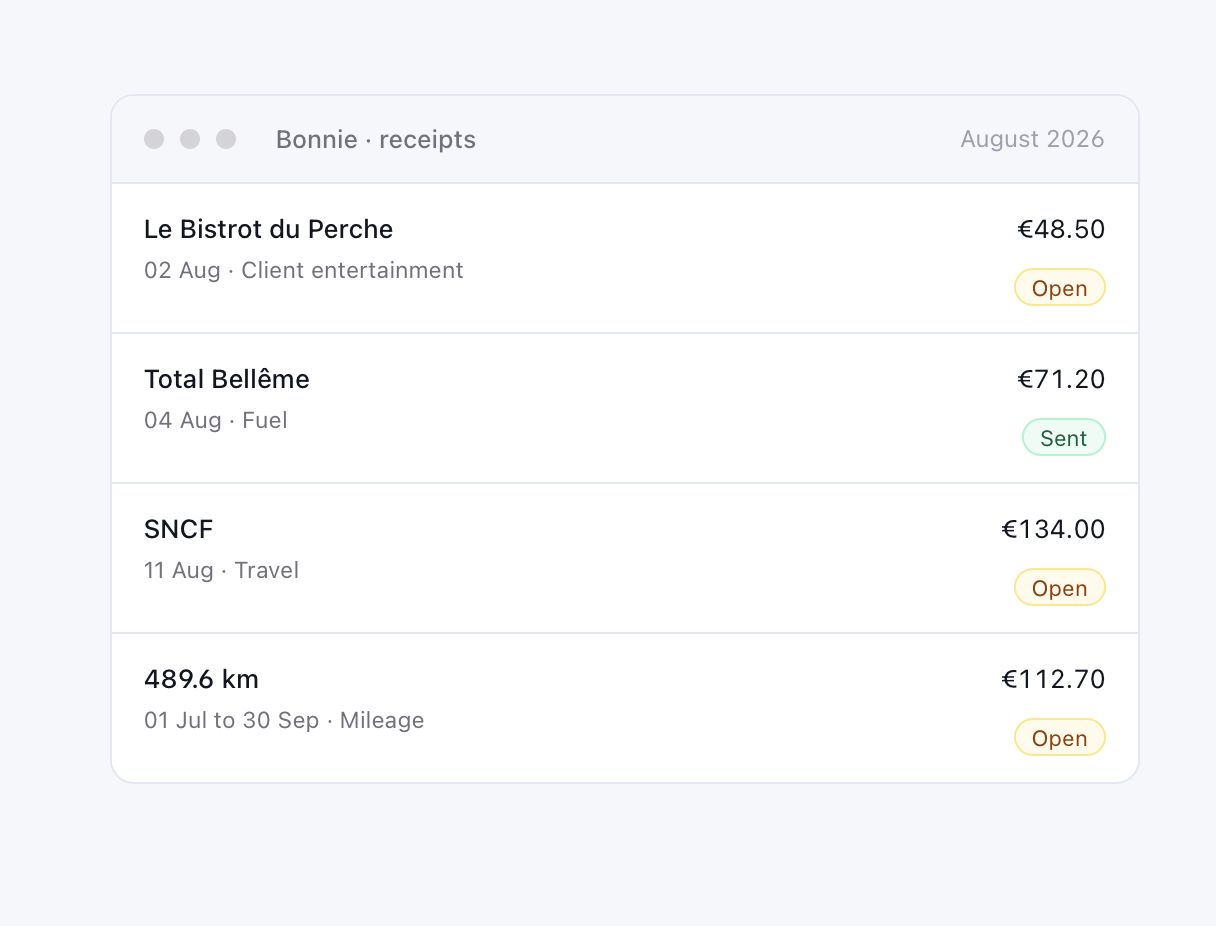
Every expense tool we tried was built for the wrong minute.
They are built for the end of the month, when somebody sits down with a pile of paper and starts typing. That is the minute the software is designed around, and it is the minute where the information is already gone.
Bonnie is built for the other minute: the one where the receipt is still in your hand.
It started as one file
The first version was a single HTML file that somebody here wrote for their own receipts. No account, no server, nothing behind it. It did roughly one thing: photograph a receipt and get the number off it before the paper went into a coat pocket.
It was not a product. It was one person solving their own problem well enough to prove the problem was real, and then other people asking for a copy. That is the whole origin, and it is why Bonnie is shaped the way it is rather than the way expense software usually is.
The hard part is not the software
A receipt is in your hand for about a minute. In that minute you know things you will not know later: which shop, what it was for, and whether the company is paying or you are.
By the end of the month a pile of receipts all look the same. The supplier is a logo you half recognise, the total is legible, and the reason is gone. Whose money it was has become a guess.
So Bonnie does three things in the shop rather than at the desk:
- Photograph it. Bonnie reads the supplier, the date and the total off the paper.
- Confirm what it read. It is usually right, and you can see when it is not.
- Answer one question: the company's money, or yours.
That third one is asked straight after the photograph, on purpose. It is the only moment the answer is free.
Company and private never mix
This is the rule the rest of the app is built around.
Company money was already spent by the company. It is bookkeeping, and nobody owes anybody anything. Private money is money you are owed, so it goes on a report, gets approved, and gets paid back.
Those are two different kinds of thing, and Bonnie never puts them in one document. There is deliberately no "export everything" button, because the only thing that button does is mix them.
The ones that were never on paper
Plenty of what you spend never arrives as a receipt. A hosting bill, a phone contract, an airline ticket. They come as a PDF attached to an email, and photographing a screen is not a filing system.
So every account gets its own Bonnie address. Forward the mail and the invoice files itself. Mail from your own people is filed on its own; anything else waits in an inbox and says why it is there, so nothing lands in your books unasked. The address is a secret, because anybody holding it can file into your books, and replacing it is one button.
What comes out
Not a folder of photographs, and not a spreadsheet. A claim: one document with a number on it that somebody can actually pay.
Every receipt gets its own page, numbered to match the overview. Your half is already signed, with your name and the time, so it never has to be printed in order to be signed. The document is kept exactly as it went out, so you can always produce what somebody received.
It starts with one person
Bonnie starts as one person's app and never asks you to pretend otherwise. On your own you never meet the word organisation. When there are more of you, invite them, and everybody files into the same books.
Bonnie is free while it is in beta, and accounts are let in by hand.
Your receipts are already somewhere: a wallet, a coat pocket, a photo library, an envelope in the glovebox. Bonnie is the version of that which adds up.
This post also appears on Bonnie.
More from the portfolio. Back to the blog
Have any feedback? Get in touch
Get new posts in your inbox.
Everything the portfolio publishes, from all eight products. One email when we publish, nothing in between.